
PVA vs. PP Fibers: Why Modulus Matters in Structural Applications

Updated: Aug 24
Information Tags
• Type: 4-minute read
• Audience: Construction professionals, engineers, architects, contractors

Understanding Fiber Modulus in Concrete Reinforcement
In the realm of fiber-reinforced concrete (FRC), not all synthetic fibers are created equal. One of the most important mechanical properties to consider is modulus — a measure of a material’s stiffness or resistance to deformation under load.
What Is Modulus?
The term "modulus" refers to a material's ability to resist elastic deformation when subjected to stress. In structural applications, high-modulus fibers like PVA provide superior crack control, load transfer, and post-cracking strength compared to low-modulus alternatives such as PP fibers.
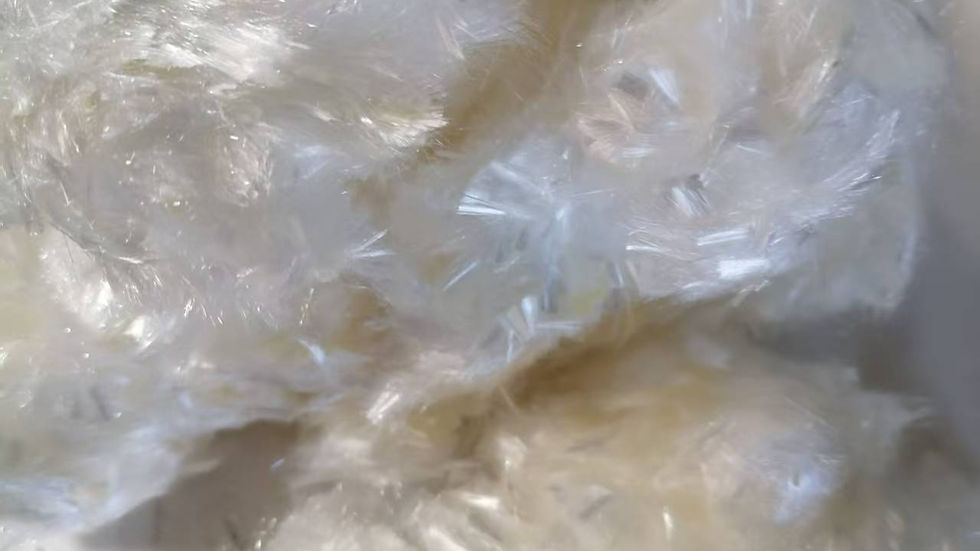
PVA Fibers: High Modulus for High-Performance Structures
Polyvinyl Alcohol (PVA) fibers are engineered with a high tensile modulus, typically ranging from 30 to 40 GPa. This makes them ideal for reinforcing concrete structures that must withstand heavy loads, repeated stresses, and environmental exposure.
Key Advantages of PVA Fibers
Excellent bond with cementitious matrices
High tensile strength and stiffness
Superior crack bridging capability
Resistance to chemical degradation and alkali environments
These characteristics make PVA fibers particularly suitable for infrastructure projects such as bridges, tunnels, and industrial flooring where durability and safety are paramount.

PP Fibers: Lower Modulus, Limited Structural Use
On the other hand, polypropylene (PP) fibers have a much lower modulus — typically below 2 GPa — which limits their effectiveness in structural reinforcement.
Common Uses for PP Fibers
Temperature and shrinkage crack control
Fire-resistant concrete (spalling prevention)
Non-structural applications such as sidewalks and light-duty slabs
While PP fibers offer benefits like cost-effectiveness and thermal spalling reduction, they lack the stiffness needed to carry significant structural loads after cracking occurs.
Comparative Performance: PVA vs. PP in Real-World Applications
When evaluating PVA vs. PP fibers, it becomes clear that the choice hinges on the intended use and performance requirements.
Load-Bearing Capacity
Structural elements reinforced with high-modulus PVA fibers demonstrate significantly better flexural strength and toughness than those using low-modulus PP fibers. This is crucial in applications like precast panels, beams, and decks where post-crack behavior is essential.
Crack Control and Durability
PVA fibers excel at controlling both initial and secondary cracking due to their high modulus and strong interfacial bond with concrete. In contrast, PP fibers primarily help reduce plastic shrinkage cracks but do little to enhance long-term structural integrity.
Selecting the Right Fiber for Your Project
Choosing between PVA and PP fibers depends on the structural demands of your project.
When to Choose PVA Fibers:
Structural concrete requiring enhanced ductility and strength
Exposure to aggressive environments
Long-term durability and minimal maintenance
When to Choose PP Fibers:
Cost-sensitive applications
Fire protection in concrete
Shrinkage crack control in non-structural elements
Understanding the importance of modulus helps ensure you're selecting the right fiber for the job — one that aligns with both engineering requirements and economic feasibility.
Innovation and the Future of Synthetic Fibers in Construction
As construction standards evolve, so does the demand for smarter, stronger materials. Researchers are exploring hybrid fiber systems that combine PVA and PP fibers to achieve both structural performance and fire resistance.
Toward Smarter Material Design
Emerging technologies include:
Surface-modified fibers for improved bonding
Bio-based polymers with tunable modulus
Smart fibers capable of sensing strain or damage
These innovations aim to push the boundaries of what fiber-reinforced concrete can achieve — making modulus an even more strategic consideration in future material design.
Explore PIONEER’s range of concrete reinforcement fibers and how they improve concrete properties. Visit our website: www.pioneerfibre.com
Micro fiber >> Learn More
Macro fiber >> Learn More
Steel fiber >> Learn More
Asphalt fiber >> Learn More
Looking for a tailored fiber or concrete reinforcement solution?
Our technical team supports mix design optimization, material selection,
and project-specific recommendations worldwide.


Comments