


PIONEER PNE
Steel Fiber Reinforced Concrete
Metal Fiber Additives for Concrete Reinforcement
Since 2002, we have specialized in concrete crack resistance, waterproofing, and anti-corrosion technologies.
Steel Fibers for Concrete: Types and Selection
High-Strength Steel Fibers for Fiber Reinforced Concrete (SFRC)
PIONEER PNE High-Strength Steel Fibers
PIONEER PNE steel fibers are engineered to significantly enhance the mechanical performance of concrete by improving crack resistance, post-crack strength, and impact durability. With a range of fiber types—including end-hooked, crimped, corrugated, and ultra-fine micro steel—our solutions are suited for demanding applications such as tunnel linings, industrial flooring, precast components, pavements, shotcrete, and ultra-high-performance concrete (UHPC).
These steel fibers act as internal reinforcement, distributing stress more effectively and increasing the toughness and fatigue resistance of concrete structures. Their uniform dispersion helps minimize crack propagation and supports long-term structural performance, especially under dynamic or heavy loading conditions.
Choose Steel Fiber by Concrete Application and Performance Requirement
PIONEER PNE steel fibers are available in multiple geometries for concrete applications where crack bridging and post-crack performance are relevant design considerations. Selection should be based on the reinforcement function, concrete element, required residual performance, concrete mix, placing method and project acceptance criteria.
Steel fiber is not an automatic replacement for conventional reinforcing steel or welded wire reinforcement. Any substitution or reduction decision should be confirmed by the project design, applicable requirements and validated performance evidence.


Compare PNE Steel Fiber Types
Fiber type
Selection focus
Relevant product path
Glued end-hooked steel fiber
Batching and distribution requirements for the approved concrete mix
Crimped or corrugated steel fiber
Project-required geometry and performance evidence
PNE CS-4025 / SS-9054
Copper-coated micro steel fiber
UHPC or other micro-steel applications; confirm current product documentation
PNE MS-6013
Hybrid fiber solution
Required reinforcement role and system-specific test evidence
Hybrid Steel Fiber
Product geometry alone does not determine suitability. Review the current TDS, available test documentation and project-specific design criteria before selecting a product.
What to Confirm Before Specifying Steel Fiber
Before requesting a technical recommendation, provide:
-
Concrete application and element type
-
Reinforcement function and design loads
-
Required residual performance or applicable test requirement
-
Mix design, placing and finishing method
-
Exposure conditions and corrosion-related project requirements
-
Proposed dosage range, if already specified
-
Current project specification and acceptance criteria
For preliminary dosage discussion, read the steel fiber dosage guide. Final dosage must be verified for the specific project; it should not be selected from a universal category-page range.

Contact Our Sales & Technical Team
For product inquiries, quotations, technical support, or distribution opportunities,
contact our team directly.
Sales & Business: Sales@pioneerfibre.com
Technical Support: Support@pioneerfibre.com
Sales Manager: +1 (406) 717-9829
Technical Director: +1 (929) 569-9992
Get a Quick Quote or Product Recommendation
Tell us about your application, and our team will help you find the right product and solution.Select your application below for a faster response.
Privacy Assurance: We respect your privacy and will never share your information.
Looking for a Quote or More Information about Our Fibers?
At PIONEER, we’re committed to delivering the best and most relevant information to support your needs. Reach out to us for more details and discover the benefits we offer:
-
Factory-Direct Pricing
-
Expert Guidance on Fiber Applications
-
Customized Solutions for Your Project
-
Fiber Samples Available for Testing
Privacy Assurance: We respect your privacy and will never share your information.
Why Choose Us?
Proven Expertise & Greater Savings
24 years of focus
on fiber reinforcement solutions.
5,000 tons yearly
from advanced manufacturing.
20+ countries served
with global product distribution.
1,000 projects proven
in diverse applications worldwide.
Why Choose PIONEER® Technologies
Product-Specific Documentation
Request current technical data sheets, available test reports and applicable conformity documents for the selected steel fiber.
Application-Based Selection
Select steel fibers according to the concrete application, production process and specified performance requirements.
Steel Fiber Options
Compare available fiber geometries, dimensions and supply formats for industrial floors, precast concrete, shotcrete and other selected applications.
Technical Support
Get support with product selection, dosage evaluation and mixing procedures. Reinforcement design requires project-specific engineering review and supporting performance data.

26,500m² production base
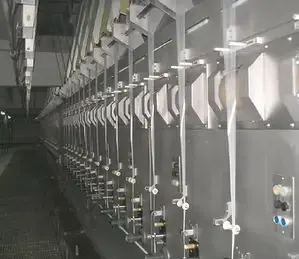
Advanced fiber dispersibility
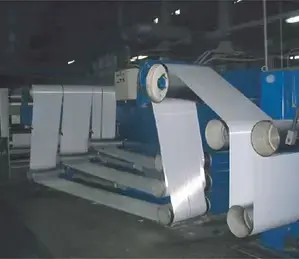
Exceptional tensile strength
FAQ
Steel fibers may supplement or, in certain engineered applications, replace specific conventional reinforcement functions when supported by structural design, relevant testing, project specifications and applicable approvals. They are not a universal substitute for rebar or welded wire reinforcement.
Start with the concrete application and required performance. Compare fiber geometry, dimensions, aspect ratio, tensile strength, mixing and placement requirements, and available test evidence. Review the relevant product technical data sheet and project acceptance criteria before selection.
Dosage depends on the required structural or service performance, concrete mix, fiber type, placement method and project specifications. Confirm the proposed dosage through applicable test results and the approved mix design; there is no single dosage suitable for every project.
Macro and micro steel fibers differ in size, intended concrete matrix and reinforcement function. Micro steel fibers are commonly evaluated for fine high-performance matrices such as UHPC, while larger steel fibers are selected for other fiber-reinforced concrete systems. Selection must be based on project requirements and test evidence.