
Understanding Polypropylene Fiber: Enhancing Concrete Durability

Updated: Aug 25
Information Tags
• Type: 4-minute read
• Audience: Construction professionals, engineers, architects, contractors

Discover PIONEER’s Polypropylene Fiber solutions. [Learn more]
Introduction
Polypropylene (PP) fiber has become a key component in modern concrete applications, providing exceptional durability and resilience under challenging conditions. This blog explores the core principles of PP fiber technology, its impact on concrete performance, and why it has become an essential choice for infrastructure and construction projects.
What is Polypropylene Fiber?
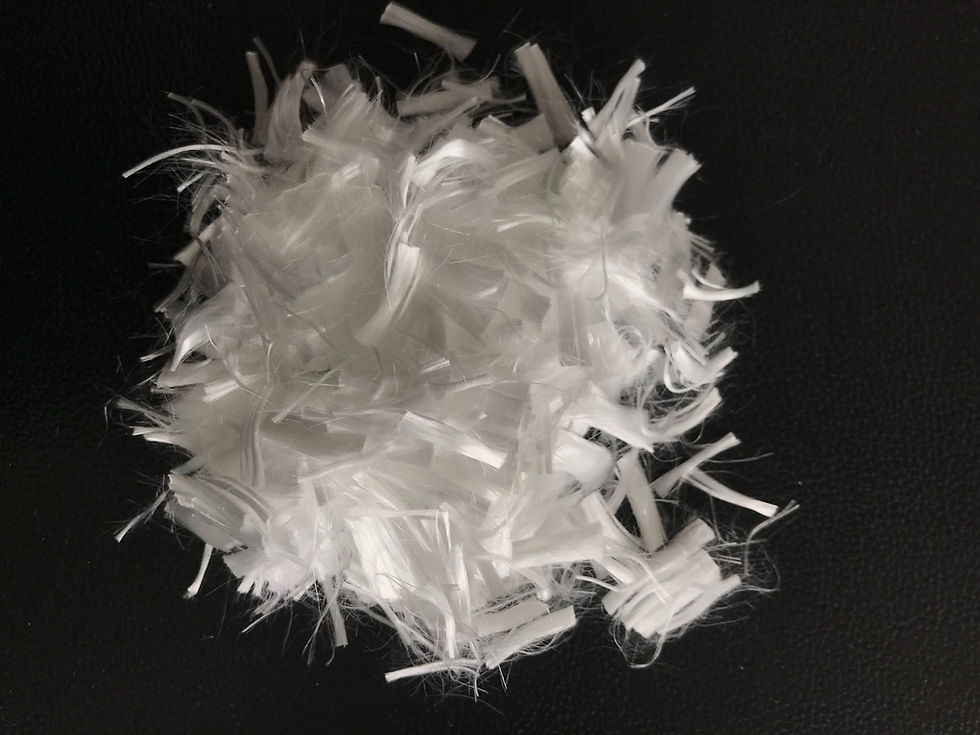
Polypropylene fiber is a synthetic, thermoplastic polymer derived from propylene monomers. In concrete, these fibers are introduced to improve tensile strength, reduce shrinkage cracking, and enhance overall durability. PP fibers are non-corrosive, alkali-resistant, and lightweight, making them an ideal alternative to traditional reinforcement methods like steel mesh.
How Polypropylene Fiber Enhances Concrete Durability
• Crack Control: PP fibers distribute internal stress and inhibit the formation of micro-cracks, significantly reducing the risk of shrinkage cracks.
• Improved Toughness: By forming a three-dimensional reinforcement network, PP fibers enhance the post-crack load-bearing capacity of concrete.
• Increased Durability: The fibers reduce permeability, preventing water and chemical ingress that can lead to corrosion or deterioration.
• Resistance to Impact and Abrasion: PP fiber-reinforced concrete demonstrates superior resistance to surface wear, making it ideal for high-traffic and industrial applications.

Find the perfect solution for your concrete project. [Explore solutions]
Applications of Polypropylene Fiber in Concrete
PP fibers are widely used in:
• Industrial Floors: Enhancing wear resistance and minimizing maintenance costs.
• Tunnel Linings: Providing crack control and durability in underground environments.
• Precast Elements: Ensuring dimensional stability and reducing defects.
• Shotcrete Applications: Improving cohesion and reducing rebound loss during spraying.
Key Benefits Over Traditional Reinforcement
Polypropylene fiber offers distinct advantages compared to steel mesh or rebars:
• Corrosion-Free: No risk of rust or corrosion in alkaline environments.
• Lightweight: Easier to handle and transport.
• Even Distribution: Ensures uniform reinforcement throughout the concrete matrix.
• Cost-Effective: Reduces the need for complex installation and labor-intensive processes.
Conclusion: The Future of Durable Concrete
Polypropylene fiber represents a significant advancement in concrete reinforcement technology. Its ability to control cracks, enhance toughness, and increase durability makes it an indispensable solution for modern construction challenges. As infrastructure demands continue to rise, PP fiber will play a crucial role in delivering long-lasting, resilient structures.
Explore PIONEER’s range of concrete reinforcement fibers and how they improve concrete properties. Visit our website: www.pioneerfibre.com
Micro fiber >> Learn More
Macro fiber >> Learn More
Steel fiber >> Learn More
Asphalt fiber >> Learn More
Looking for a tailored fiber or concrete reinforcement solution?
Our technical team supports mix design optimization, material selection,
and project-specific recommendations worldwide.



Comments