
How Ultra-High Molecular Weight Fibers Enhance Concrete Ductility

Updated: Aug 24
Information Tags
• Type: 4-minute read
• Audience: Construction professionals, engineers, architects, contractors

The Importance of Ductility in Modern Concrete
Ductility — the ability of a material to deform under stress without fracturing — is a critical performance metric in modern concrete design. Traditional concrete, while strong in compression, is inherently brittle and prone to sudden failure under tension or impact loads.
Why Ductility Matters
In structural engineering, enhanced ductility allows concrete to absorb energy, resist crack propagation, and maintain load-bearing capacity even after initial damage. This is especially crucial in seismic zones, blast-resistant structures, and infrastructure exposed to cyclic loading.
Understanding Ultra-High Molecular Weight Fibers
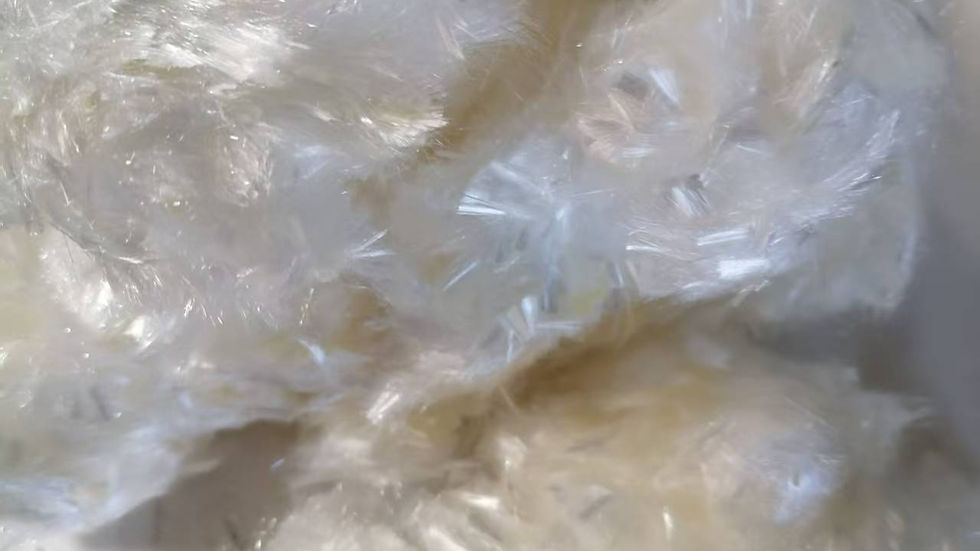
Ultra-high molecular weight (UHMW) fibers, such as UHMW polyethylene (UHMWPE) and certain formulations of polyvinyl alcohol (PVA), are engineered with extremely long polymer chains that significantly enhance mechanical properties.
Key Characteristics of UHMW Fibers
Exceptional tensile strength
High fatigue resistance
Low density and high toughness
Excellent chemical and abrasion resistance
These properties make them ideal for reinforcing cementitious materials where improved post-cracking behavior and energy absorption are required.

How UHMW Fibers Improve Concrete Ductility
When incorporated into concrete, UHMW fibers act as micro-reinforcements that bridge cracks at both macro and micro levels, effectively increasing the material’s ability to undergo deformation without catastrophic failure.
Mechanisms Behind Enhanced Ductility
Crack Bridging: Fibers intercept and span developing cracks, distributing stress more evenly.
Fiber Pull-Out Resistance: The bond between fiber and matrix determines how much force is needed to dislodge the fiber, influencing energy dissipation.
Multiple Cracking Behavior: Instead of forming one dominant crack, fibers promote the formation of multiple fine cracks, enhancing strain capacity.
This combination of behaviors transforms concrete from a brittle material into a more ductile composite, capable of withstanding dynamic and extreme loading conditions.
Comparison with Conventional Fibers
Unlike traditional synthetic fibers like polypropylene (PP) or low-modulus polyester, UHMW fibers offer superior mechanical performance due to their molecular structure and fiber-matrix interaction.
Property | UHMW Fibers | PP Fibers |
|---|---|---|
Tensile Strength | 2,000–4,000 MPa | 300–500 MPa |
Modulus | 50–100 GPa | < 2 GPa |
Crack Control | High | Moderate |
Post-Crack Performance | Excellent | Limited |
This comparison highlights why UHMW fibers are increasingly favored in structural applications requiring high ductility and long-term durability.
Real-World Applications of UHMW Fiber-Reinforced Concrete
The use of UHMW fibers has expanded across various sectors, particularly in projects demanding resilience and safety.
Infrastructure Examples:
Bridge decks – Improved impact and fatigue resistance
Tunnel linings – Enhanced fire and spalling resistance
Marine structures – Superior corrosion resistance and crack control
Blast-resistant buildings – Increased energy absorption and ductility
These applications benefit not only from the mechanical advantages of UHMW fibers, but also from reduced maintenance costs and extended service life.
Innovation and Future Trends in Fiber Technology
As demand for sustainable and resilient construction grows, so does the development of next-generation fiber technologies.
Emerging Developments Include:
Hybrid systems combining UHMW fibers with steel or carbon fibers
Bio-based ultra-high molecular weight polymers
Smart fibers embedded with sensors for real-time structural monitoring
These innovations aim to further enhance the performance and environmental footprint of fiber-reinforced concrete systems.
Sustainability and Long-Term Value
Beyond performance benefits, UHMW fibers contribute to sustainable construction by extending the lifecycle of concrete structures and reducing the need for repairs and replacements. Their lightweight nature also lowers transportation emissions and facilitates easier handling on job sites.
By integrating UHMW fibers into concrete mix designs, contractors and engineers can meet modern infrastructure demands while aligning with green building standards and resource efficiency goals.
Explore PIONEER’s range of concrete reinforcement fibers and how they improve concrete properties. Visit our website: www.pioneerfibre.com
Micro fiber >> Learn More
Macro fiber >> Learn More
Steel fiber >> Learn More
Asphalt fiber >> Learn More
Looking for a tailored fiber or concrete reinforcement solution?
Our technical team supports mix design optimization, material selection,
and project-specific recommendations worldwide.


Comments