
Macro Fiber Recommended Dosage: A Guide to Optimizing Concrete Performance

Updated: Aug 11
In reinforced concrete, macro fibers (e.g., steel, synthetic, or natural fibers) enhance durability, crack resistance, and impact strength. But one critical question persists: What is the recommended macro fiber dosage? The answer depends on multiple factors—from concrete strength requirements to fiber type and application. This guide unpacks industry standards, practical calculations, and real-world examples to help you determine the right dosage for your project.
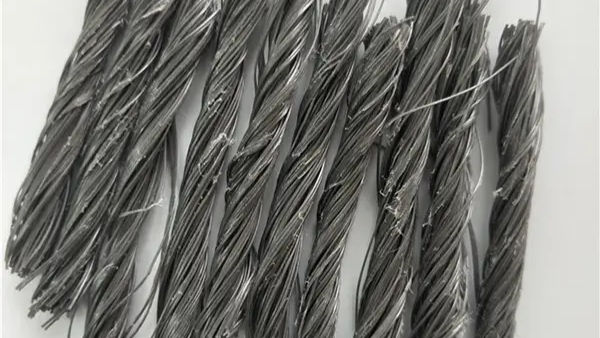
Key Factors Influencing Macro Fiber Dosage
Before diving into "recommended" numbers, it’s essential to understand what drives dosage decisions. Here are the primary variables:
Fiber Type:
Steel fibers: High tensile strength but may require lower dosages (e.g., 0.5–2.0% by volume).
Synthetic fibers (e.g., polypropylene): Lightweight with strong dispersion; often dosed at 0.1–0.5% by volume.
Natural fibers (e.g., cellulose): Eco-friendly but less robust; typically 0.3–1.5% by volume.
Concrete Strength Grade:Higher-strength concrete (e.g., C30/C40) may need lower fiber dosages to avoid compromising workability, while lower-grade mixes (e.g., C15/C20) can tolerate higher proportions.
Application Purpose:
Crack control: Higher dosages (1.0–2.0%) for severe shrinkage or thermal stress.
Impact resistance: 1.5–3.0% for industrial floors or heavy-traffic areas.
General reinforcement: 0.5–1.5% for most structural applications.
Mix Design Consistency:Over-dosing can cause fiber clumping, segregation, or pumpability issues; under-dosing limits performance gains.
Recommended Macro Fiber Dosage Ranges (By Volume)
Based on industry standards (e.g., ACI 544, EN 14889) and field trials, here are typical dosage ranges for common scenarios:
Application | Fiber Type | Recommended Dosage (%) | Key Benefit |
General-purpose concrete | Steel fibers | 0.5–1.5% | Crack control, impact resistance |
High-strength structural concrete | Steel fibers | 0.3–1.0% | Maintains workability, minimal clumping |
Lightweight concrete | Synthetic fibers | 0.1–0.5% | Improved cohesion, reduced weight |
Industrial floors | Steel/synthetic fibers | 1.0–2.0% | Enhanced abrasion resistance |
Precast elements | Natural fibers | 0.5–1.2% | Eco-friendly, reduced shrinkage |
Note: Always consult manufacturer guidelines for product-specific recommendations.
Practical Example: Calculating Dosage for a Parking Lot
Let’s say you’re designing a parking lot slab using 10mm steel fibers for crack control. The mix design requires 0.8% fiber by volume. For a 10m³ concrete pour:
Fiber Volume=10 m3×0.8%=0.08 m3\text{Fiber Volume} = 10\,\text{m}^3 \times 0.8\% = 0.08\,\text{m}^3 Fiber Volume=10m3×0.8%=0.08m3Fiber Weight=0.08 m3×7,850 kg/m3 (steel density)=628 kg\text{Fiber Weight} = 0.08\,\text{m}^3 \times 7,850\,\text{kg/m}^3\,(\text{steel density}) = 628\,\text{kg} Fiber Weight=0.08m3×7,850kg/m3(steel density)=628kg
This calculation ensures optimal coverage without overloading the mix.
Common Mistakes to Avoid
Ignoring fiber aspect ratio: Longer fibers (e.g., 30–60mm) may require lower dosages than shorter ones (e.g., 10–20mm).
Skipping pre-mix testing: Always trial small batches to check workability, setting time, and fiber dispersion.
Overlooking curing: Even with proper dosage, inadequate curing reduces fiber effectiveness—maintain moisture for 7+ days.
Conclusion: Tailor Dosage to Your Project
The recommended macro fiber dosage isn’t a one-size-fits-all number—it’s a balance of fiber type, concrete grade, and performance goals. By aligning these factors with industry standards and conducting small-scale tests, you can maximize concrete durability while avoiding costly mistakes.


Comments