


HTM Mono
Monofilament Macro Synthetic Fibers
Cost-effective 3d reinforcement
Since 2002, we have specialized in concrete crack resistance, waterproofing, and anti-corrosion technologies.
HTM Mono Monofilament Macro Synthetic Fiber for Concrete
Monofilament Macro Fiber for Concrete Reinforcement
HTM Mono is a monofilament macro synthetic fiber designed for concrete applications where distributed reinforcement, crack bridging and post-crack performance are important selection criteria. It can be evaluated for industrial floors, slabs-on-ground, pavements, precast concrete and shotcrete.
What Is HTM Mono Monofilament Macro Fiber?
HTM Mono is a monofilament macro synthetic fiber developed for fiber-reinforced concrete applications. Its individual macro filaments distribute through the concrete matrix and can contribute to crack bridging, toughness and post-crack performance when used at an appropriate product dosage and under validated project conditions.
Typical applications include industrial floors, slabs-on-ground, pavements, precast concrete and selected shotcrete applications. Final product selection should be confirmed using the current HTM® Mono technical data and project requirements.
Bulk Purchases
Bigger Discounts

HTM Mono Macrofiber: Key Benefits
Monofilament Macro Geometry
Individual macro filaments distribute through the concrete matrix and provide a distinct reinforcement form from twisted or embossed fiber products.
Post-Crack Performance Support
Can contribute to crack bridging and residual performance where supported by product-specific testing and project design.
Non-Corrosive Reinforcement
Synthetic macro fibers do not rust or create corrosion staining.
Lightweight Handling
Lower material density than steel can simplify handling, storage and dosing operations.
Distributed Reinforcement
Fibers are incorporated through the concrete mix rather than placed as a separate reinforcement layer.
Application Versatility
Suitable for evaluation in floors, slabs, pavements, precast and selected shotcrete applications.
Technical Specifications
-
Material: Verify current grade / TDS
-
Type: Monofilament Macro Synthetic Fiber
-
Specific Gravity: 0.91–0.92 g/cm³
-
Diameter: 0.30–0.69 mm
-
Available Lengths: 32 / 40 / 50 mm
-
Tensile Strength: 450–500 MPa
-
Elastic Modulus: 4–7 GPa
-
Melting Point: Approx. 160°C
-
Color: White
-
Chemical Resistance: Refer to current TDS
Refer to the current HTM Mono Technical Data Sheet for grade-specific values, tolerances and test methods.
Applicable Standards and Test Evidence
Product selection for post-crack or secondary reinforcement applications should be based on the applicable project specification and product-specific test data. Refer to the current HTM® Mono technical documents for applicable standards, test methods and performance results.
How HTM Mono Works in Concrete
During batching and mixing, HTM Mono monofilament macro fibers distribute throughout the concrete matrix. After cracking, individual fibers can bridge cracks and contribute to residual load transfer and toughness, depending on fiber dosage, concrete properties, bond behavior and the applicable test method.
The product should be evaluated using project-specific performance requirements rather than assuming that a generic dosage provides the same result in every concrete mix or element.

For selected shotcrete applications

Incorporated into the bridge deck overlay concrete
Recommended Applications
Industrial Floors & Slabs-on-Ground
For projects evaluating distributed macro reinforcement and post-crack performance in floor and slab systems.
Pavements & Overlays
For selected pavement and overlay applications where macro fiber reinforcement is compatible with design and performance requirements.
Precast Concrete
For selected precast elements where mixing, mold filling, handling and residual performance requirements support macro fiber use.
Shotcrete & Underground Works
For selected shotcrete applications where pumpability, fiber distribution and required energy-absorption or residual performance are verified.
Other FRC Applications
Other applications should be evaluated against the current TDS, product test data and project specification.
Dosage and Mixing Guidelines
HTM Mono dosage should be selected according to the concrete application, required post-crack performance, test method and project design. The current public page lists 1.8–4.5 kg/m³ with 3.0 kg/m³ as a common reference, but final values should be verified against the current TDS and project-specific evidence.
Item
Guidance
Typical Range
1.8–4.5 kg/m³
Common Reference
3.0 kg/m³
Addition
Add during batching or with aggregates
Mixing
Mix sufficiently for uniform fiber distribution
Final Selection
Based on project design and product test data
Packaging and Supply Options
Available lengths: verify against current TDS
-
Bulk packaging
-
Small-dose / soluble packs where available
-
OEM/private label where genuinely offered

Contact Our Sales & Technical Team
For product inquiries, quotations, technical support, or distribution opportunities,
contact our team directly.
Sales & Business: Sales@pioneerfibre.com
Technical Support: Support@pioneerfibre.com
Sales Manager: +1 (406) 717-9829
Technical Director: +1 (929) 569-9992
Get a Quick Quote or Product Recommendation
Tell us about your application, and our team will help you find the right product and solution.Select your application below for a faster response.
Privacy Assurance: We respect your privacy and will never share your information.
Why Choose Us?
Proven Expertise & Greater Savings
Since 2002
FFiber Reinforcement Expertise.
Advanced Manufacturing
for Consistent Product Quality.
Global Distribution
& Supply Chain Support.
Experience Across
Diverse Construction Projects.
Looking for a Quote or More Information about Our Products?
Tell us your application and we’ll recommend the right macro or micro fiber solution for your project.
At PIONEER, we’re committed to delivering the best and most relevant information to support your needs. Reach out to us for more details and discover the benefits we offer:
-
Factory-Direct Pricing
-
Expert Guidance on Fiber Applications
-
Customized Solutions for Your Project
-
Fiber Samples Available for Testing
Privacy Assurance: We respect your privacy and will never share your information.
Why Choose PIONEER Technologies
1. Product-Specific Technical Data
TDS, SDS and available test evidence by product.
2.Macro Fiber Range
Monofilament, twisted, embossed, blended and high-performance macro options.
3. Engineering Review Support
Selection guidance based on project criteria, test method and concrete conditions.
4. International Supply
Manufacturing and supply support for project and distributor requirements.

26,500m² production base

Advanced fiber dispersibility
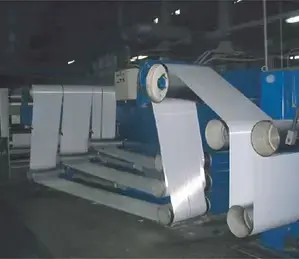
Exceptional tensile strength
FAQ
HTM Mono is a monofilament macro synthetic fiber designed for concrete applications where distributed reinforcement, crack bridging and post-crack performance are important selection criteria.
Typical applications include industrial floors, slabs-on-ground, pavements, precast concrete and selected shotcrete applications, subject to project requirements and product-specific technical data.
It may be considered in selected secondary-reinforcement applications where project design, required test results and local approval support the substitution.
The current public page lists 1.8–4.5 kg/m³ as a typical range, but final dosage should be based on the current TDS, concrete mix, application and required performance.
Its suitability for structural or post-crack functions should be evaluated using product-specific test data, the project design and the applicable performance requirements.