
What Is Embossed Macro-Micro Synthetic Fiber Blend?

Understanding what is embossed macro-micro synthetic fiber blend configuration requires an investigation into how cementitious structures experience volume adjustments across separate curing stages. Concrete elements are highly sensitive to volumetric stress over their entire lifecycle. In the fresh fluid phase, rapid surface water evaporation generates capillary forces that lead to plastic shrinkage defects.
Once hardened, external loading and thermal shifts introduce tensile strains that can cause structural macro-fractures.
An embossed macro-micro synthetic fiber blend is an engineered composite additive designed to manage both failure stages by combining two distinct spaces-scale polymer geometries into a single pre-blended SKU.
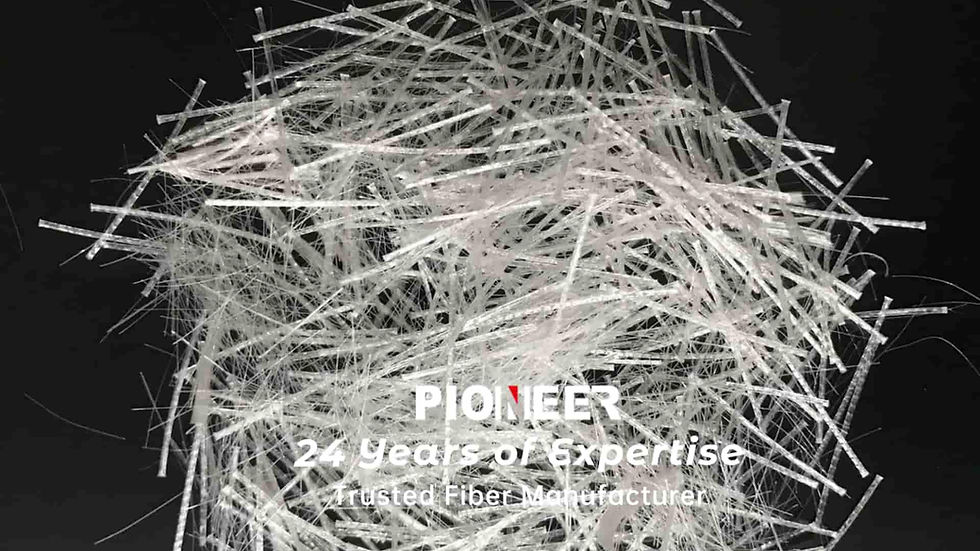
What Is Embossed Macro-Micro Synthetic Fiber Blend: Dual-Scale Structural Mechanisms
The technical role of this hybrid system relies on the functional division of labor between its internal structural components. Rather than combining random polymer lines, the system pairs precise ratios of high-fineness micro filaments with thick, straight macro strands featuring continuous surface embossing.
The micro component consists of low-denier monofilament polyolefins that disperse thoroughly during batching. This dense distribution reduces capillary water channel migration, helping to mitigate early-age plastic shrinkage cracking. Simultaneously, the macro component consists of high-stiffness straight strands that remain inactive until the cured matrix develops visible micro-fissures.
Performance Boundaries and Selection Logic
Specifiers often review Embossed Macro Micro Fiber Blend mechanics to evaluate how high-density surface textures affect interfacial bonding under mechanical stress. When selecting material baselines, engineers consult an Embossed Macro Synthetic Fiber Blend guide to balance seasonal evaporation risks with target post-crack structural performance.
Producers can review certified oxide chemistries, aspect ratios, and material density records by visiting the HTM Emb Blend product page parameters. However, achieving successful structural reinforcement targets depends entirely on the complete composite mix proportions, requiring project-specific laboratory testing to validate mechanical design metrics.
Technical References:
Aligned with polymer material definitions and compliance criteria established in ASTM C1116/C1116M (Standard Specification for Fiber-Reinforced Concrete, Type III Synthetic FRC).
Technical Verification Statement:
Material dispersion and post-crack flexural parameters may vary based on local aggregate shape, binder chemistry, and field compaction methods. Users must double-check the physical label and execute localized laboratory batch testing to confirm performance baselines.


Comments