
PVA Fiber for UHPC: From Product Selection to Verified Performance

PVA Fiber for UHPC may be evaluated when a project seeks defined tensile, flexural, crack-distribution, or toughness behavior in a dense cementitious matrix. Suitability cannot be established from the words “PVA” and “UHPC” alone. The fiber grade, matrix, production process, and test basis must work together.
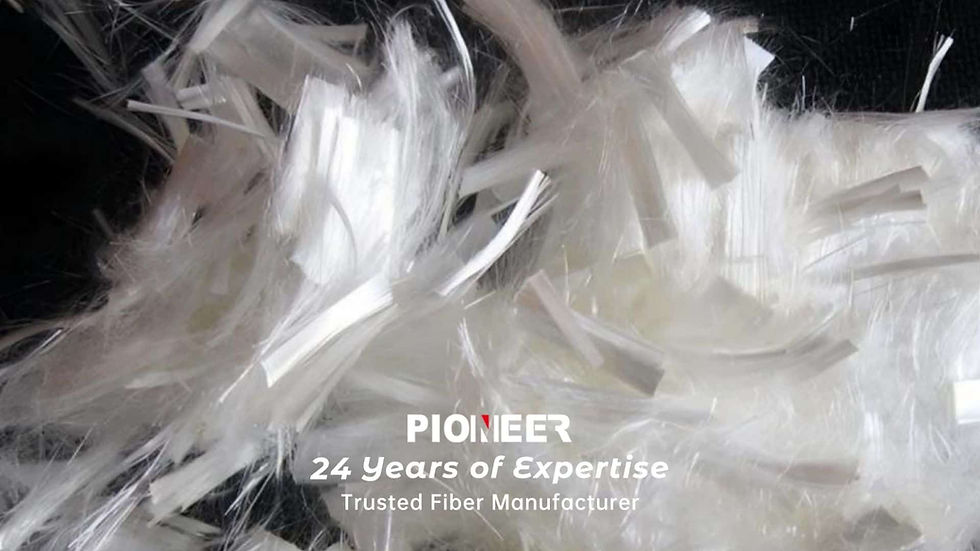
Selecting PVA Fiber for UHPC
Start by defining the required composite response and applicable design method. Then review the fiber’s material identity, dimensions, surface treatment, tensile properties, modulus, elongation, dosage basis, and current technical documentation. These inputs help describe a candidate; they do not guarantee a finished UHPC result.
The HPM PVA product page is the owner for product-specific information. Do not transfer data from another PVA grade, a general research paper, or an unrelated engineered cementitious composite without documenting the differences.
Matrix Compatibility and Mixing
UHPC matrices can have high powder contents, low water-to-binder ratios, chemical admixtures, and sensitive mixing sequences. Fiber addition may change mixing demand, flow, entrapped air, orientation, casting, and finish. Excessive bond can also influence failure mode; “stronger bond” is not automatically better for every targeted composite response.
Conduct a representative trial with the proposed binder system, aggregates, admixtures, mixer, batch size, fiber addition method, casting process, and curing. Observe dispersion and fresh behavior before relying on hardened results. The Data Sheets center should be checked for current handling instructions.
Match Testing to the Design Question
Compressive strength does not by itself describe tensile or post-crack behavior. The test program should measure the properties used in design and report specimen geometry, curing, loading configuration, number of specimens, variability, and failure observations.
Use the High-Performance Fiber Test Data guide to check report relevance. For structural use, the engineer must determine whether the selected method and results can support the intended element, loads, exposure, and serviceability limits.
Control Changes After Approval
Once the trial system is approved, identify which changes require renewed review. A different PVA grade, fiber length, dosage, binder source, admixture, mixer, curing regime, or specimen method may alter fresh or hardened behavior. Production records should connect delivered fiber batches and concrete batches to the approved procedure. This traceability is especially important when a design value depends on tested composite behavior.
Specify who reviews deviations and how acceptance is documented before full production begins.
Technical References
ASTM C1856/C1856M, fabrication and testing of UHPC specimens
ASTM C1609/C1609M, flexural performance where applicable
ACI 239R, ultra-high-performance concrete guidance


Comments