
Sustainability Trends: Mineral Fibers vs. Synthetic Fibers in Construction

Updated: Aug 20
Information Tags
• Type: 4-minute read
• Audience: Construction professionals, engineers, architects, contractors
Abstract
When evaluating mineral fibers vs synthetic fibers in construction, understanding their environmental impact and long-term performance is key to sustainable design. As the construction industry embraces sustainability, material selection is under increasing scrutiny. This article compares mineral fibers like basalt and rock wool with synthetic fibers such as polypropylene and alkali-resistant (AR) glass fibers, evaluating their environmental impact, performance, and long-term viability in green building practices.

See how we’ve helped projects around the world succeed. [View projects]
Introduction: The Shift Toward Sustainable Fiber Solutions
With global attention on climate change and resource efficiency, sustainable materials are becoming a core consideration in construction. Fiber reinforcement—used to enhance concrete’s strength, durability, and crack resistance—is no exception.
Two major categories dominate fiber use in construction:
Mineral fibers, derived from natural volcanic rock or slag
Synthetic fibers, including polypropylene, AR glass, and carbon-based options
Each offers distinct advantages, but which aligns better with today’s sustainability trends in mineral and synthetic fibers for construction?
This article explores the environmental footprint, recyclability, energy consumption, and structural benefits of both types, helping professionals make informed decisions for eco-conscious projects.
Mineral Fibers vs. Synthetic Fibers in Construction: Eco Impact
To evaluate sustainability, we must consider the full lifecycle of fiber production—from raw material sourcing to manufacturing, application, and end-of-life disposal.
Mineral Fibers: Natural Origins, High Energy Use
Common mineral fibers include:
Basalt fiber: Made from volcanic rock, melted and extruded into filaments
Rock wool (stone wool): Produced by spinning molten rock into fibrous insulation
While these fibers are derived from abundant natural resources, their production requires high-energy processes, often involving fossil fuels.
However, they offer:
Excellent thermal and acoustic properties
Fire resistance
Long service life
Non-toxic composition
Synthetic Fibers: Versatile but Fossil-Fuel Dependent
Key synthetic fibers used in construction include:
Polypropylene (PP) fibers: Used to control plastic shrinkage cracking
Alkali-resistant (AR) glass fibers: Reinforce GFRC and GRC panels
Carbon fibers: High-performance applications in retrofitting
Most synthetic fibers rely on petrochemical feedstocks, raising concerns about carbon emissions and non-biodegradability. However, innovations in recycled and bio-based polymers are beginning to address these issues.

Contact us for samples, consultations, and tailored solutions. [Contact us]
Performance Considerations in Green Building Applications
Beyond environmental impact, fiber performance plays a crucial role in sustainability. Materials that extend the lifespan of structures, reduce maintenance needs, and lower energy consumption contribute significantly to overall sustainability goals.
Mineral fibers provide excellent fire resistance and thermal insulation, reducing HVAC loads.
Synthetic fibers improve structural integrity, especially in thin-section elements like GFRC façades.
Both can reduce concrete cracking, extending the service life of buildings and infrastructure.
The challenge lies in balancing performance with ecological responsibility—a key focus in current sustainability trends in mineral and synthetic fibers for construction.
Market Drivers Behind the Adoption of Sustainable Fiber Technologies
The growing demand for green building certifications—such as LEED, BREEAM, and WELL—is reshaping how materials are selected. Developers and architects now prioritize products that meet criteria like:
Low embodied carbon
Recyclability
Indoor air quality compliance
Local sourcing
In response, fiber manufacturers are investing in:
Bio-based sizing agents
Carbon-neutral production methods
Recycled content integration
Both mineral fibers and synthetic fibers are evolving to meet these demands, with companies like Pioneer Fibre leading innovation in AR glass fiber sustainability.
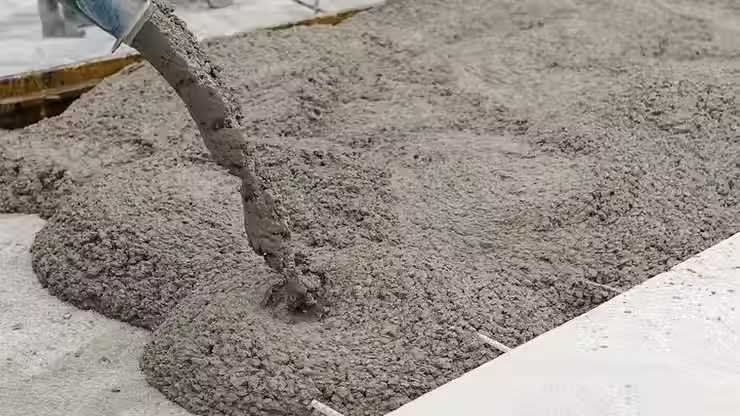
Find the perfect solution for your concrete project. [Explore solutions]
Real-World Case Studies: Eco-Conscious Fiber Solutions
Several landmark projects highlight the successful integration of sustainable fiber technologies:
The Edge, Amsterdam: Utilized advanced fiber-reinforced concrete to reduce material waste and support its net-zero energy design.
Bosco Verticale, Milan: Featured lightweight GRC panels reinforced with alkali-resistant fibers to support extensive vertical gardens.
Singapore Sports Hub: Incorporated basalt fiber composites in noise barriers for corrosion resistance and environmental compatibility.
These examples demonstrate how both mineral and synthetic fibers can contribute to sustainable outcomes when applied thoughtfully.
Final Thoughts: Choosing the Right Fiber for a Greener Future
There is no one-size-fits-all solution when it comes to selecting between mineral fibers and synthetic fibers in construction. Each has unique strengths and limitations, and the optimal choice depends on the specific application, regional availability, and sustainability priorities.
At Pioneer Fibre, we believe in offering fiber solutions that combine performance with environmental responsibility. Our AR glass fibers are engineered for long-term durability and compatibility with green building standards, ensuring that you can build sustainably without compromising structural integrity.
Explore PIONEER’s range of concrete reinforcement fibers and how they improve concrete properties. Visit our website: www.pioneerfibre.com
Micro fiber >> Learn More
Macro fiber >> Learn More
Steel fiber >> Learn More
Asphalt fiber >> Learn More
Looking for a tailored fiber or concrete reinforcement solution?
Our technical team supports mix design optimization, material selection,
and project-specific recommendations worldwide.


Comments