
Polypropylene Fiber vs Glass Fiber – Strength, Durability & Cost
Updated: Aug 20
Suitable for architectural engineers, structural engineers, flooring contractors, precast component manufacturers, and technicians.
Polypropylene (PP) microfibers and glass fibers are two widely used synthetic reinforcement materials in concrete and mortar systems. While both improve crack resistance and surface durability, their material composition, mechanical behavior, alkali stability, and cost vary significantly. Choosing the right fiber depends heavily on the application—slabs, repair mortars, precast elements, renders, or specialty concrete formulations.
This article compares PP fiber and glass fiber from an engineering perspective, helping contractors, precast producers, and designers select the optimal reinforcement solution.
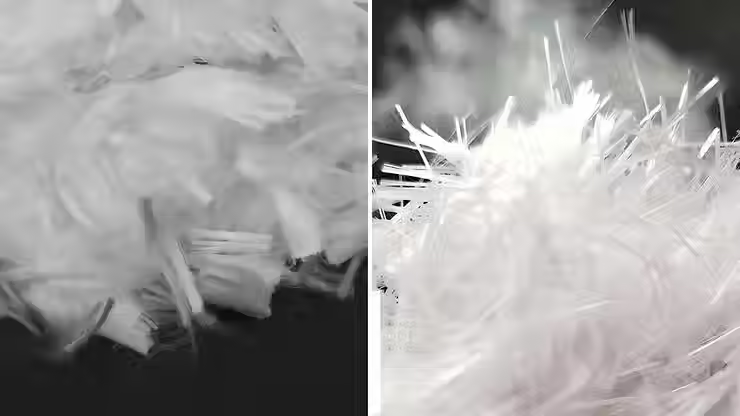
Material Differences
Polypropylene Fiber (PP Fibers)
PP microfibers are:
Hydrophobic
Chemically inert
Alkali-resistant
Lightweight and uniformly dispersible
Common in slabs, screeds, mortar, shotcrete, and precast
Typical attributes:
Density ≈ 0.91 g/cm³
Tensile strength: 400–600 MPa
Melting point: 160–170°C
Excellent chemical resistance
Glass Fiber (E-glass / AR-glass)
E-glass fibers (ordinary glass fiber, poor alkali resistance)
AR-glass fibers (containing zirconium oxide, generally ≥16% ZrO₂, significantly improved alkali resistance)
Typical attributes:
Density ≈ 2.6 g/cm³
Tensile strength: 1000+ MPa
Excellent stiffness
Must be AR-grade for cement compatibility
Effect on Concrete Properties
Crack Control
PP Fiber:Highly effective in reducing plastic shrinkage cracks within the first 0–24 hours.
Glass Fiber:Provides higher stiffness, improving early tensile resistance.
Flexural & Tensile Strength Contribution
PP Fiber:Low modulus means limited structural contribution; mainly for plastic shrinkage and surface durability.
AR-Glass Fiber:Higher modulus yields noticeable increases in flexural strength, commonly used in GRC(Glass Fiber Reinforced Concrete)panels.
Workability
PP Fiber:Easier to disperse; minimal effect on slump.
Glass Fiber:May ball if mixed improperly; higher density makes dispersion more sensitive.
Durability & Alkali Resistance
Polypropylene Fiber
100% non-corrosive
Does not absorb water
Excellent chemical and alkali resistance
Maintains long-term performance in concrete’s high-pH environment
Glass Fiber
E-glass fibers degrade rapidly in cement unless coated or treated.
AR-glass fibers resist alkali attack but still require attention to:
Mix alkalinity
Exposure conditions
Long-term microstructural interaction
PP fibers offer superior long-term durability for general concrete applications.
Which Is Better for Slab, Mortar, Precast?
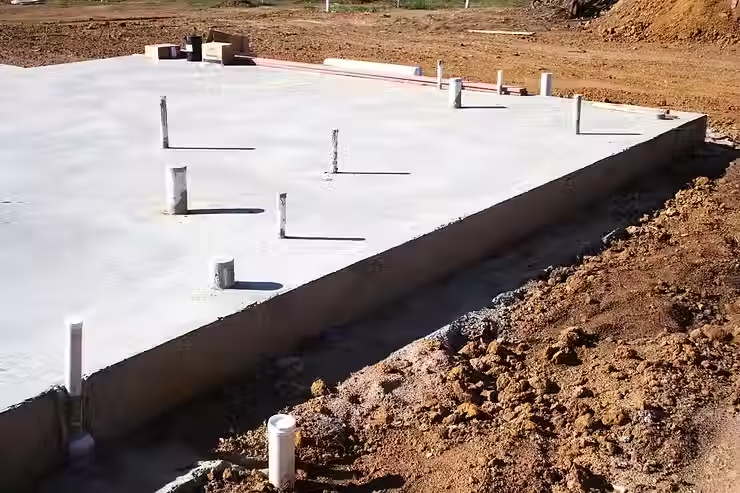
Concrete Slabs-on-Ground
Recommended:Polypropylene FibersExcellent for plastic shrinkage control and surface durability.Cost-effective solution for floors, screeds, toppings.
Mortars & Renders
PP Fiber for crack control
AR-Glass Fiber when strength, stiffness, or impact resistance is required (e.g., façade renders, repair mortars)
Precast Elements
PP Fiber: Surface durability, crack control
AR-Glass: Used in GRC products requiring thinner sections or architectural finishing
Cost Comparison
PP fibers are significantly more cost-effective per cubic meter.
AR-glass fibers are 3–5× higher cost but provide structural stiffness where needed.

Final Summary
Polypropylene fibers are the ideal solution for:
✔ Concrete floors
✔ Industrial slabs
✔ Screeds
✔ Mortars
✔ Precast crack control
Glass fibers—especially AR-grade—are preferred in:
✔ High-strength GRC
✔ Thin-wall architectural precast
✔ Structural repair mortars
Explore PIONEER’s range of concrete reinforcement fibers and how they improve concrete properties. Visit our website: www.pioneerfibre.com
Micro fiber >> Learn More
Macro fiber >> Learn More
Steel fiber >> Learn More
Asphalt fiber >> Learn More
Looking for a tailored fiber or concrete reinforcement solution?
Our technical team supports mix design optimization, material selection,
and project-specific recommendations worldwide.


Comments